
Absence and Attendance
Absence
Illness
If your child is unwell and can’t attend school, please inform the school office as soon as possible, and by 9am.
As part of our Safeguarding Procedures, the school office will endeavour to contact the parent or carer and other emergency contacts if no message has been received regarding the reason for the absence to check on the safety of the child.
Medical Appointments
Medical appointments taken during school time are registered coded as an 'M', and are classed as an 'authorised absence'.
a) Every effort should be made to arrange medical appointments outside school hours.
b) An appointment card or verification by the doctors/ dentist/hospital is required.
c) If it is necessary for a child to be out of school for this reason, the child should be returned to school directly after the appointment.
d) If your child is absent due to vomiting and diarrhea then they should not return to school for the next 48 hours. The 48- hour period starts from the last time that the child is ill. This is to reduce the risk of spreading the infection to other children and adults at the school.
e) Medical certificates are required for absence greater than five days.
Planned Absence - Family Holidays
Pupil absence during term time can seriously disrupt a pupil’s continuity of learning. Parents are requested not to take their children out of school during term time. Pupils will only be given permission to take leave in term time if there are exceptional circumstances.
If you are planning for your child to take a leave of absence during term-time, please complete a Leave of Absence Form. These are available in person from a member of our Senior Leadership Form. You can speak to a member of our Senior Leadership Team at the playground gate in the mornings or arrange an appointment via the school office. Please be aware that these forms are not available directly from the school office.
As a school we are asked to inform you that, in line with Worcestershire County Council Policy, unauthorised absence may be subject to a Penalty Notice Fine, as follows:
First Offence - the first time a Penalty Notice is issued for term-time leave or irregular attendance the amount will be £80 per parent, per child if paid within 21 days, rising to £160 per parent, per child if paid within 28 days. If payment is not made within 28 days, further legal action may be taken,
Second Offence (within 3 years) - the second time a Penalty Notice is issued for term-time leave or irregular attendance the amount will be £80 per parent, per child if paid within 21 days, rising to £160 per parent, per child if paid within 28 days. If payment is not made within 28 days, further legal action may be taken,
Third Offence (within 3 years) - the third time an offence is committed for term time leave or irregular attendance, a Penalty Notice will not be issued, and the case may be presented to the Magistrates' Court under S4441 Education Act 1996. Cases found guilty in the Magistrates' Court could result in a fine up to £2500 per parent, per child, and will also hold a criminal record, for failing to secure regular attendance.
Our key priority is to ensure that our pupils are as successful as possible and achieve their full potential. Please support the Local Authority and Government policy stating that holidays should be only be taken in the 13 weeks of school holidays, except in exceptional circumstances.
Attendance

North Worcester Primary Academy is proudly recognised as an Inclusive Attendance school. Our unwavering commitment to attendance centres around child-centric actions, evidence-informed practices, and a shared understanding of everyone's roles and collective responsibilities to promote exceptional attendance.
Inclusive Attendance Professional Development Model
Our attendance approach is fundamentally guided by the Inclusive Attendance professional development model. Comprising six tailored Learning Modules, this model empowers us to deepen our understanding by facilitating continuous professional learning for all staff. Within this model, the four domains of practice ensure the provision of professional learning, professional development, evidence-based practices, and exemplary leadership and management to seamlessly integrate theory into practice.
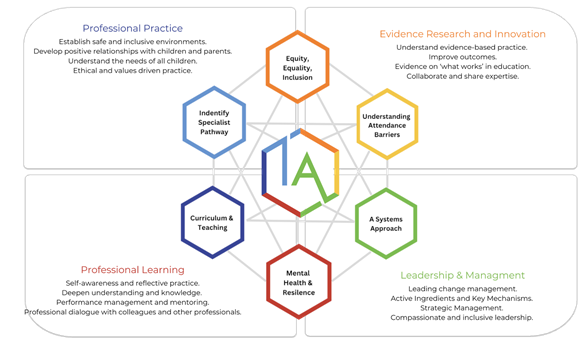
Annual Inclusive Attendance 7-Month Development Programme
Year after year, we review and further enhance our attendance practices through dedicated participation in the Inclusive Attendance 7-month development programme. This investment allows us to remain at the forefront of educational change and extends unparalleled support to our children and their families, equipping them with access to the finest possible assistance.
Multi-Tiered System of Support
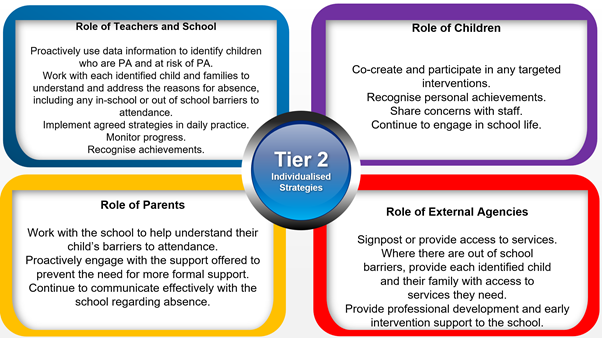
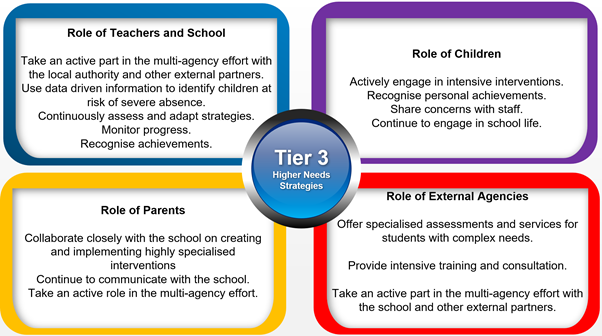
To guarantee a comprehensive approach to attendance, we implement a Multi-Tiered System of Support. A Multi-Tiered System of Support (MTSS) for school attendance involves three tiers of intervention, with roles for teachers, the school, children, parents, and external agencies – including the Local Authority. Data-driven decision-making and training requirements are pivotal to the implementation of the system. The system aligns with the Department for Education's (DFE) "Working Together to Improve School Attendance" guidelines.

Tier 1 - Universal Approach: Establishing a baseline universal attendance approach that benefits all children.
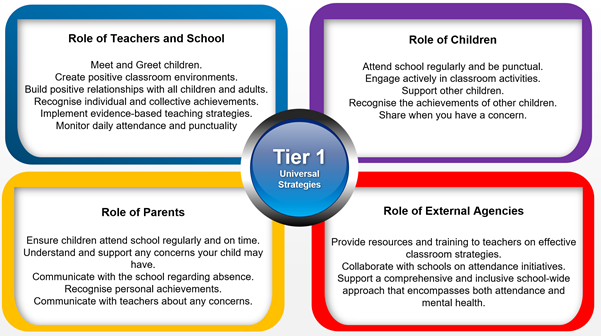
Tier 2 - Individualised Strategies and Early Help Support: Tailoring strategies to individual needs and providing early help support for persistent attendance challenges.
Tier 3 - Higher Needs Strategies Support: Furnishing specialised support for children, young people, and families with complex attendance requirements, including access to external agency support when necessary.
Recognition-Based Approach
Our attendance philosophy is rooted in a recognition-based approach that recognises both personal and collective achievements. This approach serves to thwart isolation, prevent victimisation, cultivate positive environments, nurture relationships, foster inclusivity, and ultimately cultivate intrinsic motivation among our children, families, and staff.
The Importance of School Attendance
School attendance is not merely a requirement but a fundamental pillar of education. It plays a pivotal role in shaping academic success, personal growth, and future prospects, making it an indispensable aspect of any educational system.
- Academic Achievement: Regular attendance directly correlates with academic success. Children who attend school consistently are more likely to keep up with the curriculum, perform better in exams, and improve their life outcomes.
- Knowledge Acquisition: School is where children acquire knowledge and skills that are crucial for their personal and professional growth. Missing days means missing out on valuable learning opportunities.
- Social Development: School provides a vital social environment for children and adolescents to interact with peers, develop friendships, and learn essential social skills. Consistent attendance ensures children remain connected to their peer group.
- Building Routine: School attendance establishes a structured routine in children’s lives, teaching them time management and responsibility, which are valuable life skills.
- Teacher Interaction: Regular attendance allows for meaningful teacherchild interactions. Teachers can provide personalised support, address questions, and assess individual progress more effectively when children attend regularly.
- Preventing Knowledge Gaps: Frequent absences can lead to significant knowledge gaps, making it challenging for children to catch up with missed lessons, potentially resulting in longterm academic struggles.
- School Engagement: Children who attend school regularly are more likely to engage in extracurricular activities, sports, and other enriching experiences that contribute to their overall development.
- Legal and Parental Responsibility: Parents or guardians are legally responsible for ensuring their child's regular school attendance. Failing to do so can lead to legal consequences.
- Community Wellbeing: High levels of school attendance contribute to the overall wellbeing of communities.